¶ Ontario Transmission System Map
Category: 📊 Reference
Complexity Level: ●●○○○ (Level 2 – Contextual Overview)
¶ Topic Overview
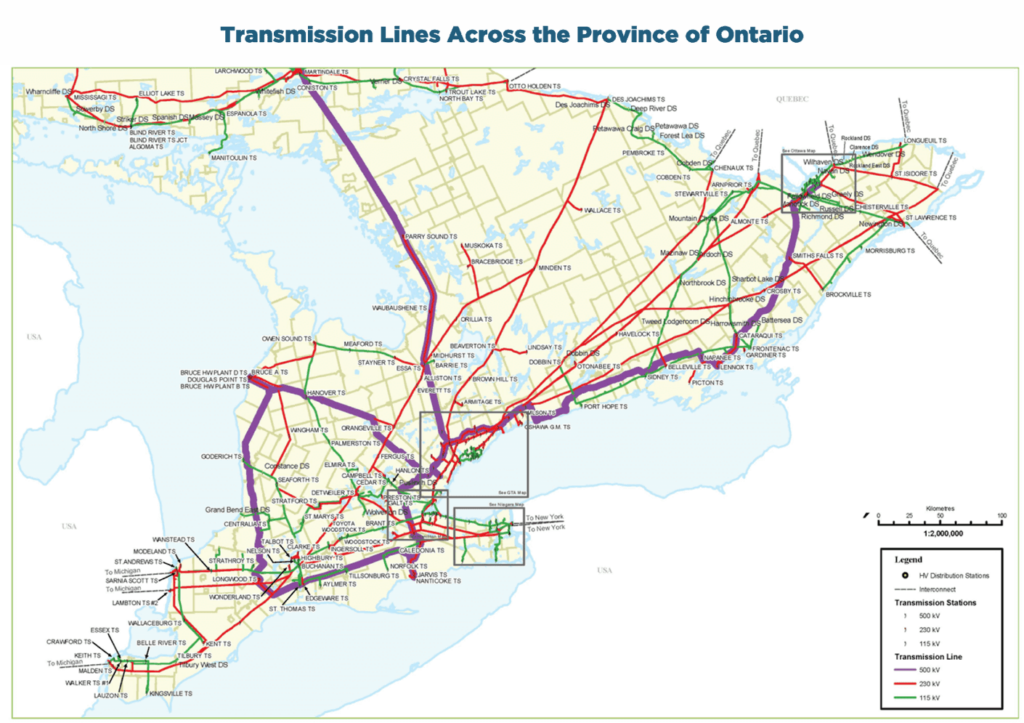
The Ontario transmission system is the high-voltage electricity network that transports power from generating stations across the province to major demand centers and distribution systems.
This network forms the backbone of Ontario’s electricity grid, enabling electricity to move efficiently across large geographic distances while maintaining reliability.
Transmission infrastructure connects:
- large generating stations
- regional substations
- major cities and industrial areas
- neighbouring electricity systems in other provinces and U.S. states
¶ Ontario Transmission System Map
¶ Transmission Voltage Levels
Ontario’s transmission system operates at several major voltage levels.
| Voltage Level | Typical Role |
|---|---|
| 500 kV | Long-distance bulk transmission backbone |
| 230 kV | Major regional transmission network |
| 115 kV | Sub-regional transmission connections |
| 44–69 kV | Sub-transmission or regional distribution interfaces |
Higher voltages allow electricity to travel longer distances with lower energy losses.
Related topic:
Transmission System
¶ Major Transmission Corridors
Several major transmission corridors carry electricity across the province.
Examples include corridors connecting:
- northern hydroelectric generation to southern Ontario demand centers
- nuclear generating stations near Lake Ontario to the provincial grid
- interties connecting Ontario with neighbouring electricity markets
These corridors form the structural backbone of the provincial power system.
¶ Interties with Neighbouring Jurisdictions
Ontario’s transmission network connects with several neighbouring electricity systems through interties.
These connections allow electricity to be imported or exported depending on market conditions and system requirements.
Major interties connect Ontario with:
- Québec
- Manitoba
- Michigan
- Minnesota
- New York
These interconnections support:
- system reliability
- electricity market trading
- emergency power support between jurisdictions
Related topic:
Electricity Market Overview
¶ Role of Transmission in Electricity Markets
Transmission infrastructure influences how electricity markets operate.
Transmission constraints may affect:
- which generators are dispatched
- electricity prices in different regions
- electricity imports and exports
The Independent Electricity System Operator (IESO) monitors transmission conditions when dispatching generators and operating the electricity market.
Related topics:
¶ Transmission Ownership
Transmission infrastructure in Ontario is owned by several regulated transmission utilities.
The largest transmitter is Hydro One Networks Inc., which operates most of the province’s transmission network.
Other licensed transmitters operate infrastructure in specific regions.
Related topic:
Transmitters
¶ Transmission Planning
Transmission infrastructure must evolve as electricity demand patterns change and new generation resources are developed.
Transmission planning evaluates:
- future demand growth
- new generation connections
- system reliability requirements
- infrastructure investment needs
Planning activities involve coordination between:
- the Independent Electricity System Operator (IESO)
- transmission companies
- the Ontario Energy Board (OEB)
- the Ministry of Energy
Related topics:
¶ Related Topics
¶ Foundations
¶ Organizations & Roles
¶ Markets & Operations
¶ External References
- Independent Electricity System Operator — Ontario Transmission System Overview
- Ontario Energy Board — Transmission Utilities and Infrastructure
- Government of Ontario — Electricity Infrastructure Information
¶ Business Opportunities
Understanding the structure of Ontario’s transmission network supports opportunities in areas such as:
- transmission infrastructure development
- grid engineering and system planning
- electricity market analysis and trading
- renewable energy project siting
- electricity infrastructure investment
Transmission corridors and system constraints often influence where new generation projects or infrastructure investments are developed.
Last Updated: 2026-04-13